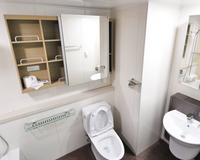

Modern restrooms do more than serve a basic function. In commercial buildings, they shape how people experience the property, how staff manage maintenance, and how owners control long-term operating costs. A restroom that feels clean, simple to use, and well-maintained leaves a strong impression on visitors, employees, tenants, and guests.
That shift has brought smart technology into restroom design. What once seemed optional now plays a practical role in day-to-day operations. From touch-free fixtures to connected dispensers and maintenance alerts, smart features help facilities operate with fewer disruptions and greater consistency.
For property owners, developers, architects, and facility managers, the appeal goes beyond novelty. Smart technology helps solve familiar problems. It supports cleanliness, reduces waste, improves traffic flow, and helps teams respond more quickly when issues arise. In busy commercial settings, those gains matter.
For a company serving commercial and ADA-focused restroom needs, with customers that include general contractors, developers, facility managers, small businesses, hospitals, government spaces, and architects, practical value aligns with real market demand. The brand voice and audience guidance also call for straightforward, professional, and helpful content that is easy to follow. Follow along as we explore the role of smart technology in modern restrooms.
Smart Design Starts With Daily Use
The best restroom technology supports the people who use the space every day. It removes friction rather than adding complexity. When someone enters a modern restroom, they should not need instructions or extra thought. The room should feel intuitive from the first step to the last.
That is why touch-free operation has become a key part of modern restroom design. Automatic faucets, soap dispensers, flush valves, hand dryers, and paper towel dispensers help create a smoother experience. People move through the space more quickly and make fewer unnecessary contacts with shared surfaces.
Smart technology also creates a more consistent restroom experience. Manual fixtures often depend on how each person uses them. One user may leave a faucet running too long, while another may use too much soap or paper. Smart fixtures deliver more predictable performance, helping the restroom stay cleaner and more orderly throughout the day.

Better Cleanliness Without Extra Guesswork
Cleanliness remains one of the biggest concerns in any commercial restroom. Smart technology helps address that concern by reducing common trouble spots and helping staff stay ahead of problems before users notice them.
Touch-free products reduce the number of high-contact surfaces in the room. That change supports a cleaner environment and can help users feel more comfortable in the space. It also reduces smudges, drips, and residue that often build up around manual fixtures.
Connected monitoring takes that benefit a step further. Some smart dispensers and restroom systems can track supply levels, usage patterns, and maintenance needs. Instead of waiting for a complaint or sending staff on constant manual checks, facility teams can use real-time data to know when a soap dispenser runs low, when a paper product needs refilling, or when a fixture needs attention.
That kind of visibility matters in large buildings and high-traffic settings. Schools, hospitals, office buildings, transportation hubs, and public facilities often have restrooms with uneven traffic throughout the day. A connected approach helps staff respond where it matters most, rather than spending time on empty checks.
Maintenance Becomes More Strategic
Many facility problems start small. A dispenser runs empty. A faucet sensor becomes inconsistent. A hand dryer loses performance. A toilet fixture starts cycling poorly. If no one catches the problem early, user frustration grows, and the restroom can quickly feel neglected.
Smart technology helps maintenance teams act earlier. Some systems flag low battery levels, unusual usage, or equipment faults before the issue becomes obvious to the public. That early visibility supports a more proactive maintenance strategy.
This proactiveness matters because restroom maintenance affects more than appearance. When one part of the room fails, people change how they use the rest of the space. They may crowd one sink area, overuse another dispenser, or leave the room with a poor impression of the whole facility. One small issue can create a larger chain reaction.
With better data, managers can also spot patterns over time. They can see which restrooms need more frequent service, which products perform better under heavy use, and where upgrades may deliver the biggest return. That shifts maintenance from a reactive task to a smarter operational decision.
Efficiency Drives Long-Term Value
Smart restrooms also appeal to decision-makers because they support operational efficiency. In commercial spaces, every repeated task adds up. Water use, paper consumption, soap waste, labor hours, and replacement schedules all affect the bottom line.
Sensor-based fixtures can help control overuse. Timed dispensing and measured output reduce waste while keeping the user experience simple. Occupancy and usage tracking can help teams align staffing and cleaning schedules with real demand instead of rough assumptions.
That kind of control becomes even more useful in properties with multiple restrooms or fluctuating traffic patterns. An office building may have steady weekday usage and quiet weekends. A healthcare setting may remain busy all day. A public venue may see sharp traffic spikes around events. Smart systems help teams respond to actual conditions rather than treating every day the same way.
In that setting, commercial bathroom accessories become part of a broader performance strategy. They are no longer just finishing pieces selected for appearance or code compliance. When chosen well, they support cleanliness, reduce waste, simplify maintenance, and improve how the room functions hour after hour.
User Experience Shapes Brand Perception
Restrooms influence how people judge a building. That is true whether they are visiting a medical office, shopping center, government building, restaurant, school, or workplace. A restroom that feels outdated or poorly maintained can affect how people view the entire property.
Smart technology helps create a more polished experience. Touch-free operation feels current and convenient. Consistent lighting, automated fixtures, and dependable product availability make the space feel cared for. Those details may seem small on their own, but together they shape confidence.
For employers, it can affect workplace satisfaction. For public-facing businesses, it can affect customer perception. For developers and architects, it can support the overall quality of the project. For facility managers, it can reduce complaints and improve day-to-day operations.
A modern restroom should work quietly in the background. When technology does its job well, users notice the comfort of the experience more than the equipment itself. That is usually the right outcome.

Accessibility Still Needs To Lead
Smart features only add value when they work for a wide range of users. In commercial restrooms, accessibility must remain part of the conversation from the start. Technology should support usability, not create barriers.
That means product placement, activation range, response time, and ease of operation all matter. A sensor-based fixture that misreads movement or sits in the wrong location can frustrate users just as much as an outdated manual product. The goal is not to add technology for its own sake. The goal is to create a restroom that works better for more people.
This point matters for a company focused on commercial restroom hardware and ADA-compliant solutions. Products need to fit real-world commercial conditions while meeting code requirements and supporting practical use. That balance becomes more important as more facilities upgrade to connected, touch-free environments.
The Future of Restroom Planning
Smart technology has evolved from a nice-to-have to a serious planning consideration in modern restrooms. Owners and design teams now focus on how a restroom performs over time, not just how it looks on opening day. They want spaces that stay cleaner, operate more efficiently, and deliver a better user experience without creating more work for staff.
As commercial buildings continue to evolve, restrooms will keep moving in the same direction. The smartest spaces will not chase technology for show alone. They will use it with purpose. When that happens, the restroom becomes more than a necessity. It becomes a better-performing part of the whole building.